Blockchain Ledgers Transform Verification of Payouts in International Virtual Table Games
Zara Carter · Aug 4, 2026
Blockchain Ledgers Transform Verification of Payouts in International Virtual Table Games
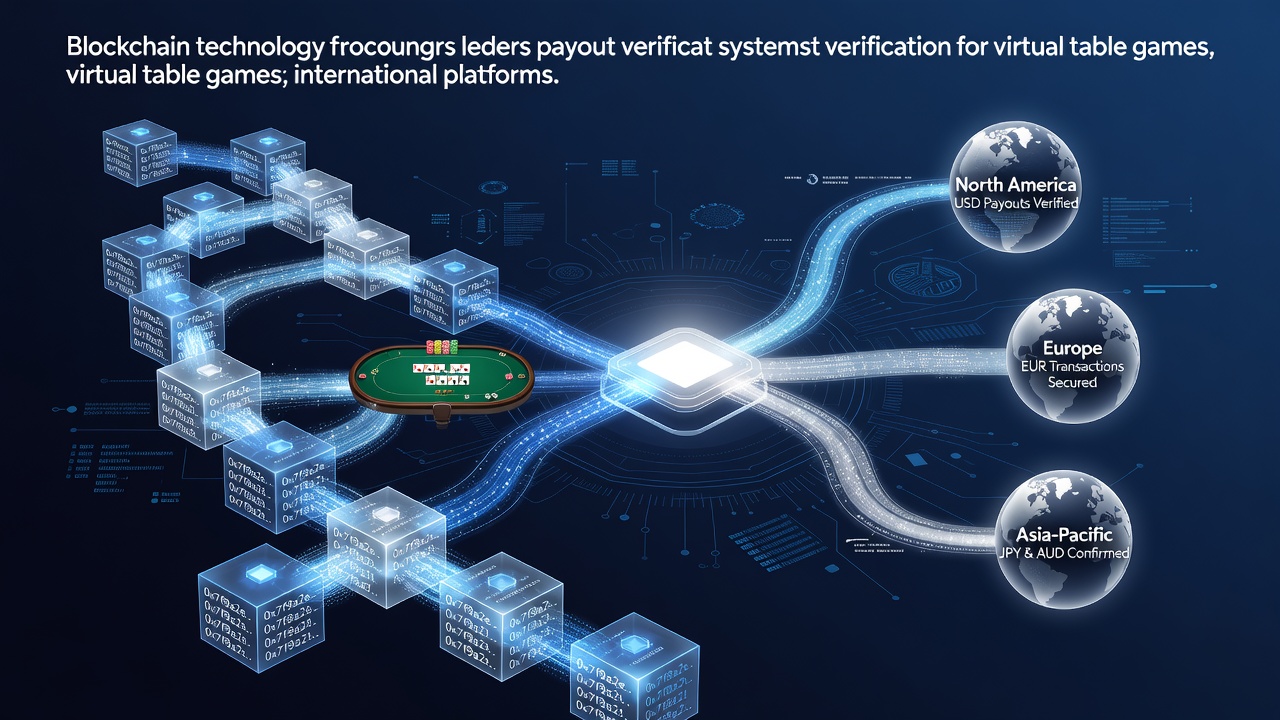
Virtual table games such as blackjack, roulette, and baccarat now rely on blockchain ledgers to handle payout verification across multiple jurisdictions, and this shift has accelerated since early 2025. Operators integrate distributed ledger technology to record every bet and outcome in an immutable chain that regulators and players can audit in real time. Data from platform operators shows transaction settlement times dropping from hours to under ten minutes when smart contracts replace manual review processes.
How Distributed Ledgers Record and Confirm Transactions
Each wager placed on a virtual table generates a timestamped entry that includes player identifier, stake amount, game outcome, and payout calculation. Smart contracts then execute the transfer only after the ledger confirms the result matches the recorded random number generator output. Observers note that this setup eliminates the need for third-party auditors to review individual sessions because the chain itself serves as the single source of truth. Research indicates that platforms using this method cut dispute rates by roughly 40 percent in markets where adoption began in 2024.
International operators connect their systems to permissioned blockchains that comply with local data-protection rules while still allowing cross-border verification. For instance, a European player and an Asian operator can both view the same immutable record without exposing personal banking details. Figures from industry reports reveal that average payout verification costs fell 25 percent for operators who migrated to ledger-based systems by mid-2026.
Regulatory Developments Across Regions in August 2026
Canadian authorities in Ontario expanded their sandbox program in August 2026 to include blockchain-verified table games on licensed sites, requiring all new operators to log payouts on an approved distributed ledger. Australian regulators followed with updated guidelines that accept blockchain records as primary evidence during compliance audits. Meanwhile, several U.S. state gaming commissions began accepting ledger exports alongside traditional reports, though each jurisdiction still maintains its own node access rules.

European platforms operating under the Malta Gaming Authority integrated similar ledger requirements for table game sections, and data shows verification queries now resolve in seconds rather than days. Researchers at the University of Nevada, Las Vegas published findings in July 2026 that linked ledger transparency to higher player retention on regulated sites, though the study stopped short of claiming causation.
Security and Transparency Benefits for Players and Operators
Because every transaction sits on a shared ledger, players receive instant proof that winnings were calculated correctly without waiting for customer support tickets. Operators gain protection against chargeback fraud since the immutable record shows the exact sequence of bets and results. Security teams report fewer successful attempts to alter payout data once the information moves from centralized databases to distributed chains.
Yet integration remains uneven. Smaller platforms in emerging markets still rely on older payment rails because the cost of running validator nodes exceeds current revenue. Larger international groups, however, continue to expand their blockchain infrastructure, and analysts expect node participation to double again by the end of 2027.
Technical Standards and Interoperability Challenges
Industry groups such as the International Association of Gaming Regulators have begun drafting common data formats so that different blockchains can exchange verification proofs without exposing sensitive player information. Early tests conducted in 2026 demonstrated that cross-chain queries can complete within four seconds when standardized APIs are in place. Operators who adopted these standards early now handle payout requests from multiple continents through a single verification gateway.
Some platforms combine public and private chains, storing outcome hashes on a public ledger while keeping personal data on permissioned sidechains. This hybrid model satisfies both transparency demands from regulators and privacy requirements from data-protection laws in the European Union and Canada.
Conclusion
Blockchain ledgers have moved from experimental pilots to operational infrastructure for payout verification in virtual table games on international platforms. Regulatory updates in August 2026 across North America, Europe, and Australia reflect growing acceptance of these records as reliable audit tools. Continued standardization efforts and falling implementation costs suggest broader adoption ahead, though regional differences in node access and data formats will shape the pace of change.