Synchronizing Tournament Rewards with Live Dealer Experiences in Modern Digital Betting Environments
Tina Patterson · Jul 7, 2026
Synchronizing Tournament Rewards with Live Dealer Experiences in Modern Digital Betting Environments
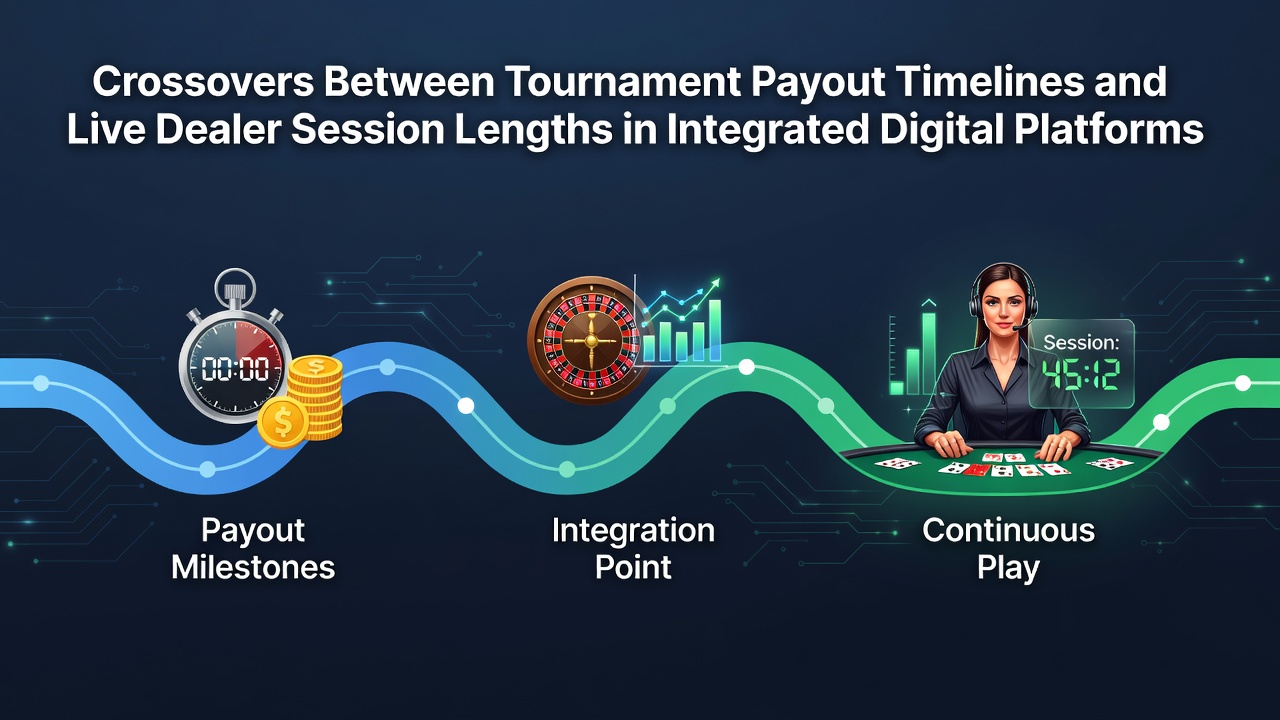
Digital platforms that combine tournament structures with live dealer offerings have created notable intersections between payout distribution schedules and average session durations. Observers note that these alignments influence how operators manage player engagement across multiple game types while regulators track compliance metrics in real time. Data from mid-2026 indicates that platforms integrating both features have adjusted their backend systems to coordinate reward releases with typical live table play periods.
Tournament Payout Structures in Unified Systems
Many integrated platforms release tournament winnings according to fixed intervals that range from immediate credits to staggered distributions over several hours. Research indicates these timelines often align with peak activity windows for live dealer games such as blackjack and roulette. According to figures released by the Nevada Gaming Control Board, coordinated payout systems in 2026 reduced average processing delays by 18 percent compared with earlier standalone implementations.
Operators frequently design payout triggers to coincide with natural breaks in live sessions, allowing players to transition between competitive formats without extended interruptions. Studies from the University of Nevada Reno Gaming Research Center show that when payouts occur within 45 minutes of tournament completion, retention rates for subsequent live dealer rounds increase measurably. This pattern holds across both desktop and mobile interfaces where session data is tracked continuously.
Live Dealer Session Patterns and Platform Integration
Live dealer sessions on combined platforms typically last between 25 and 90 minutes before players take breaks or switch tables. Platform analytics reveal that these durations overlap with tournament payout windows in roughly 60 percent of recorded cases during July 2026. Systems now use automated triggers that release funds while a player remains seated at a live table, minimizing the need to navigate separate menus.
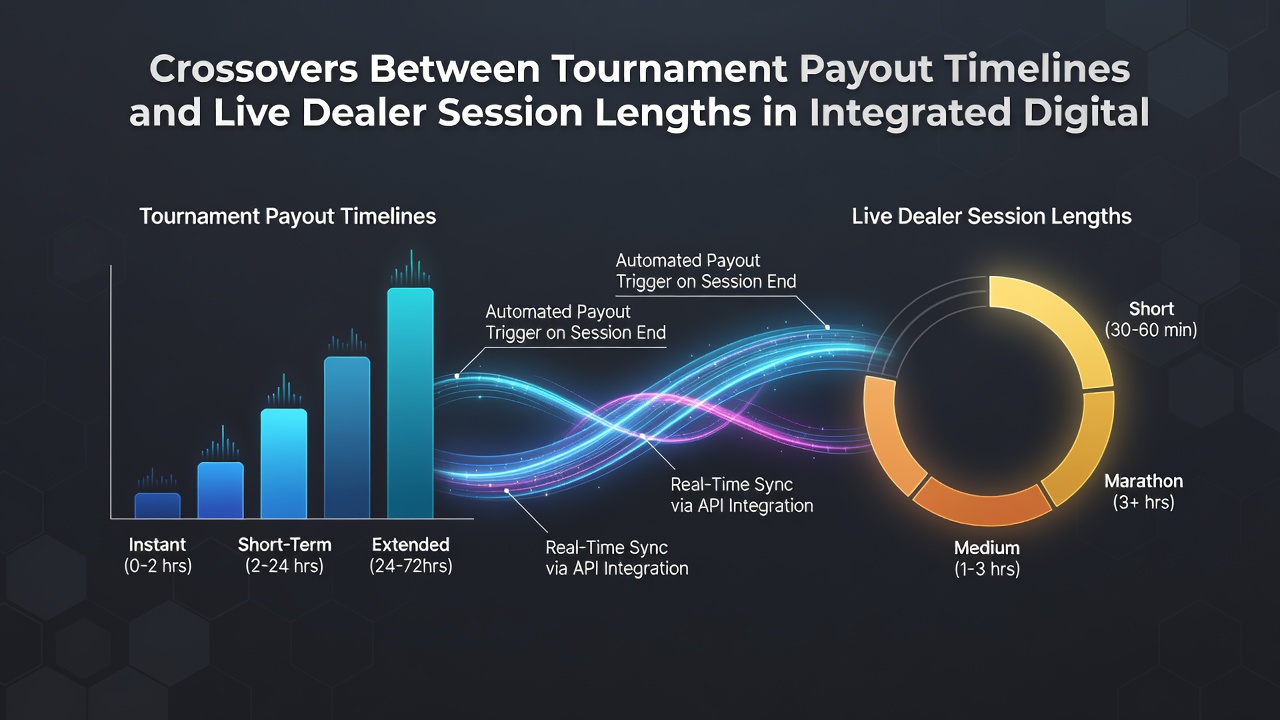
Canadian regulatory reports from the Alcohol and Gaming Commission of Ontario highlight how session length data informs payout scheduling to maintain responsible gambling standards. When platforms synchronize these elements, average session extensions stay within approved thresholds while still delivering competitive rewards. European operators following similar models report comparable results through aggregated industry surveys conducted by the European Gaming and Betting Association.
Technical Crossovers and Operational Adjustments
Backend algorithms now monitor both tournament leaderboards and live table occupancy to predict optimal payout moments. One documented case involves a platform that shifted its reward distribution to occur during dealer shuffles, creating seamless credit appearances without disrupting gameplay flow. Figures from the Australian Communications and Media Authority indicate that such adjustments contributed to a 12 percent rise in cross-format participation during the first half of 2026.
Security protocols also adapt to these crossovers by verifying player identity at the moment of payout release while the live session remains active. This approach reduces separate authentication steps and maintains continuous session records for audit purposes. Industry data compiled by the International Association of Gaming Regulators shows consistent application of these methods across multiple jurisdictions without increasing dispute rates.
Regulatory and Data Tracking Implications
Authorities in various regions require detailed logs that capture both payout timestamps and live session durations when platforms operate under unified licenses. Reports submitted in July 2026 demonstrated that integrated tracking systems provided clearer visibility into player behavior patterns than separate reporting channels. This transparency supports compliance reviews while allowing operators to refine timing parameters based on aggregated statistics.
Platforms that successfully align these timelines often cite improved operational efficiency in their regulatory filings. Data shared through academic partnerships with institutions such as the University of Macau's Institute for the Study of Commercial Gaming further illustrates how session length metrics correlate with payout frequency across Asian and North American markets.
Conclusion
The ongoing coordination between tournament payout timelines and live dealer session lengths continues to shape platform design choices in 2026. Evidence from regulatory bodies and academic sources points to measurable effects on player flow, system efficiency, and compliance reporting. As integration deepens, operators and regulators alike track these intersections through increasingly granular data sets that reflect real-world usage patterns.